Imagine starting the workday with the same old problem. One employee says they arrived on time, another forgets to mark attendance, and someone else asks a colleague to check in for them. By the end of the month, the HR team is left sorting through attendance records and trying to figure out what actually happened.
This is where choosing the right attendance check-in method can make a real difference.
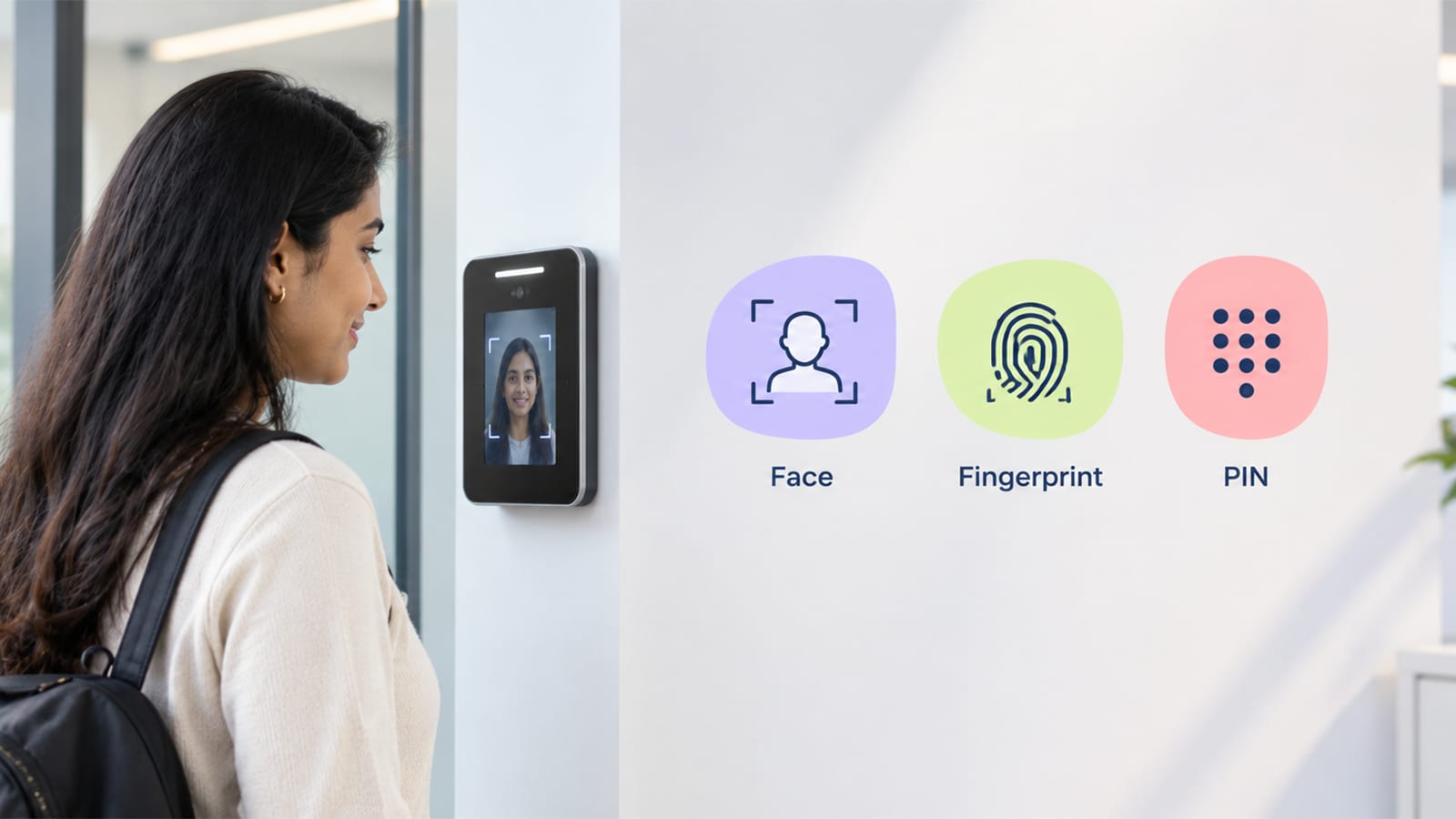
Today, businesses can record employee attendance using facial recognition, PIN codes, or fingerprints. Each method has its own advantages, and the best choice depends on your team size, workplace, budget, and daily routine.
Let's look at how these options work and which one might suit your business.
1. Face Recognition: Quick and Convenient
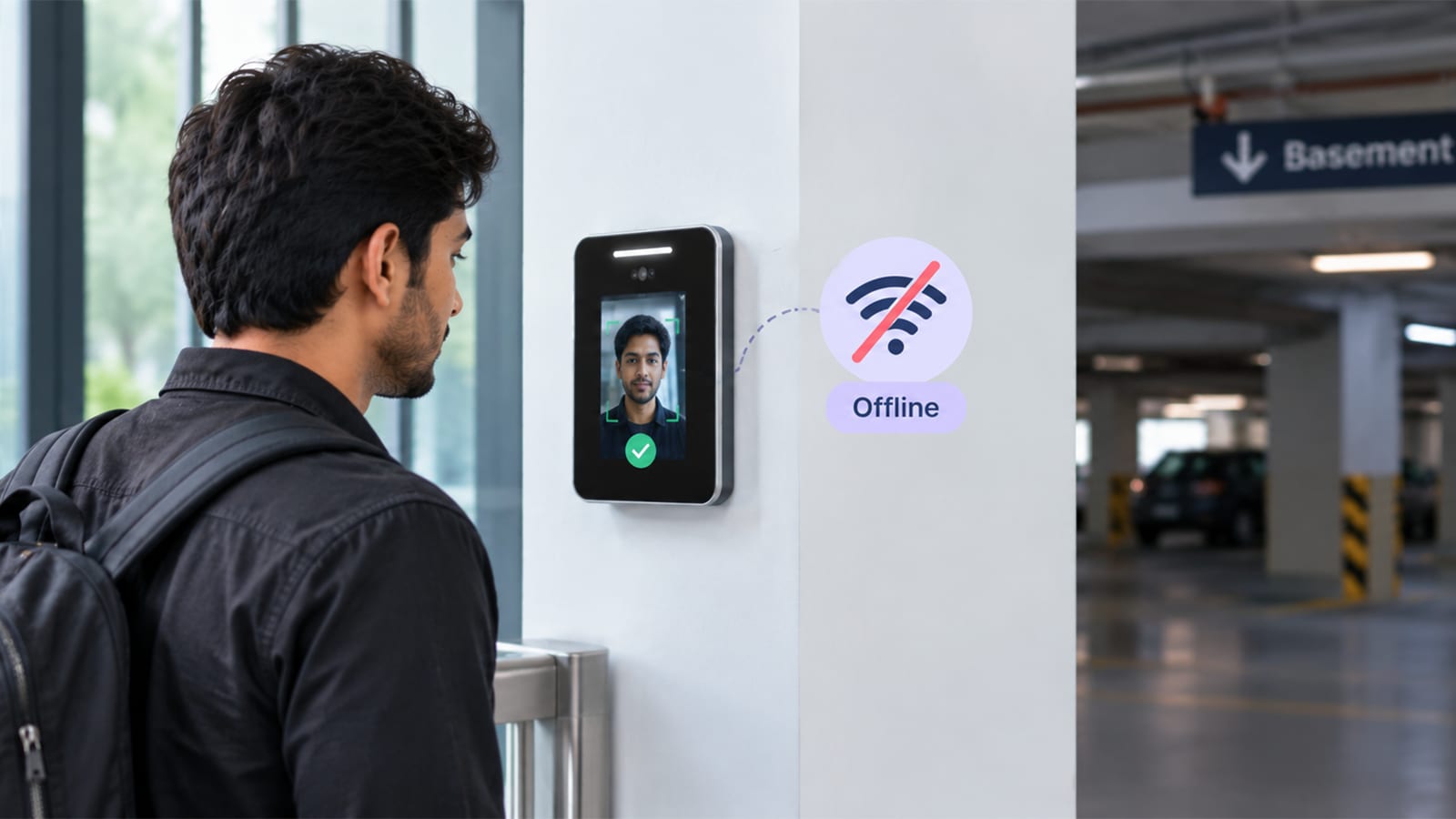
Face recognition allows employees to mark attendance by having their faces scanned by a compatible device or attendance system.
For example, an employee walks into the office, looks at the attendance device, and checks in without needing to remember a PIN or touch a scanner.
Why businesses choose face recognition
Easy to use: Employees don't need to carry a card or remember a code.
Quick check-ins: It can help reduce queues when several employees arrive together.
Less sharing of credentials: Unlike a PIN, a face cannot simply be passed to a colleague for them to enter.
Useful for busy workplaces: Offices, factories, and other locations with regular staff attendance may benefit from this method.
However, face recognition isn't perfect. Poor lighting, camera quality, or changes in appearance can sometimes affect recognition. Businesses should also check whether the system has appropriate safeguards against someone trying to use a photo or video instead of a real person.
Privacy matters, too. Facial data is sensitive, so employers should understand how it is collected, stored, protected, and used.
Best suited for: Businesses that want a convenient check-in experience and have compatible devices and suitable privacy safeguards.
2. PIN-Based Attendance: Simple and Budget-Friendly
PIN-based attendance is one of the easiest methods to understand. Each employee receives a personal code and enters it into the attendance system when arriving or leaving work.
There is no need for a camera or fingerprint scanner. Depending on the software, employees may be able to enter their PIN on a shared device or another supported interface.
Why businesses choose PIN check-in
Easy to set up: It can be a practical option for businesses that want a straightforward system.
Usually affordable: It may require less specialised hardware than biometric methods.
Simple for employees: Most people already understand how to enter a numeric code.
Convenient for smaller teams: It can work well when attendance procedures are simple.
The biggest drawback is that a PIN confirms that someone entered a code, not necessarily that the correct employee was present. Employees might share their PINs or enter attendance details for colleagues.
Businesses can reduce this risk by keeping PINs private, reviewing unusual attendance records, and combining PIN entry with additional verification where necessary.
Best suited for: Small businesses, teams with limited budgets, and workplaces where basic attendance tracking is sufficient.
3. Fingerprint Attendance: Familiar and Reliable for Many Workplaces
Fingerprint attendance uses a compatible scanner to identify an employee through their fingerprint. The employee places a finger on the scanner, and the system checks it against the registered fingerprint data.
This method has been used in offices, factories, schools, and other workplaces for years.
Why businesses choose fingerprint check-in
Individual verification: Employees use their own registered fingerprint rather than a shared code.
No passwords to remember: Staff don't have to memorise PINs or carry attendance cards.
Suitable for fixed workplaces: It can be useful where employees regularly enter through the same location.
Familiar process: Many employees have already used fingerprint scanners in other settings.
There are a few limitations. A scanner may struggle with wet, dirty, or worn fingerprints, and employees may need assistance if the device cannot read them. Shared scanners also require regular cleaning and maintenance.
As with facial recognition, fingerprint data needs careful protection. Businesses should check how biometric information is stored and whether the system meets their privacy and legal obligations.
Best suited for: Factories, offices, and other workplaces where employees check in at a fixed location and suitable scanning hardware is available.
Face vs PIN vs Fingerprint: What's the Difference?
Feature | Face recognition | PIN | Fingerprint |
Employee effort | Look at a camera | Enter a code | Scan a finger |
Special hardware | Usually required | Depends on the system | Fingerprint scanner required |
Risk of credential sharing | Lower, with proper verification | Higher | Lower, with proper verification |
Common challenge | Lighting and recognition errors | Shared or forgotten PINs | Fingerprint-reading issues |
Privacy considerations | Facial data | Code security | Fingerprint data |
Typical use | Offices and busy entry points | Budget-conscious teams | Fixed-location workplaces |
No method is automatically the best for every business. The right choice depends on how your employees work and how much verification your attendance process requires.
How Should You Choose the Right Method?
Before investing in an attendance system, ask yourself a few practical questions.
Do your employees work from one location? If everyone reports to the same office or factory, a fingerprint scanner or face recognition device may be convenient. If employees work at different sites, you may need a solution that supports your particular field-attendance process.
How large is your team? A small team may be comfortable using PINs, while a larger workforce might benefit from faster check-ins and stronger identity verification.
What is your budget? Consider not just the initial device cost but also installation, maintenance, software fees, and employee training.
How important is preventing buddy punching? Buddy punching happens when one employee marks attendance for another. PINs are easier to share, while biometric methods can make this harder. However, no method should be treated as completely foolproof.
What about privacy? Explain the attendance process to employees and make sure any personal or biometric information is handled securely and in line with applicable requirements.
Manage Attendance More Easily with Timix
Choosing a check-in method is only one part of managing employee attendance. Businesses also need a clear way to maintain records, review attendance, and reduce the time spent on manual work.
Timix is an employee management and attendance tracking solution that businesses can explore when looking to organise their attendance processes. Before choosing a specific check-in method, check which options Timix currently supports and whether they fit your team's daily requirements.
The goal isn't to choose the most advanced technology just because it sounds impressive. It's to find a method employees can use easily, managers can trust, and HR teams can maintain without unnecessary complications.